
Posted On: September 26, 2025
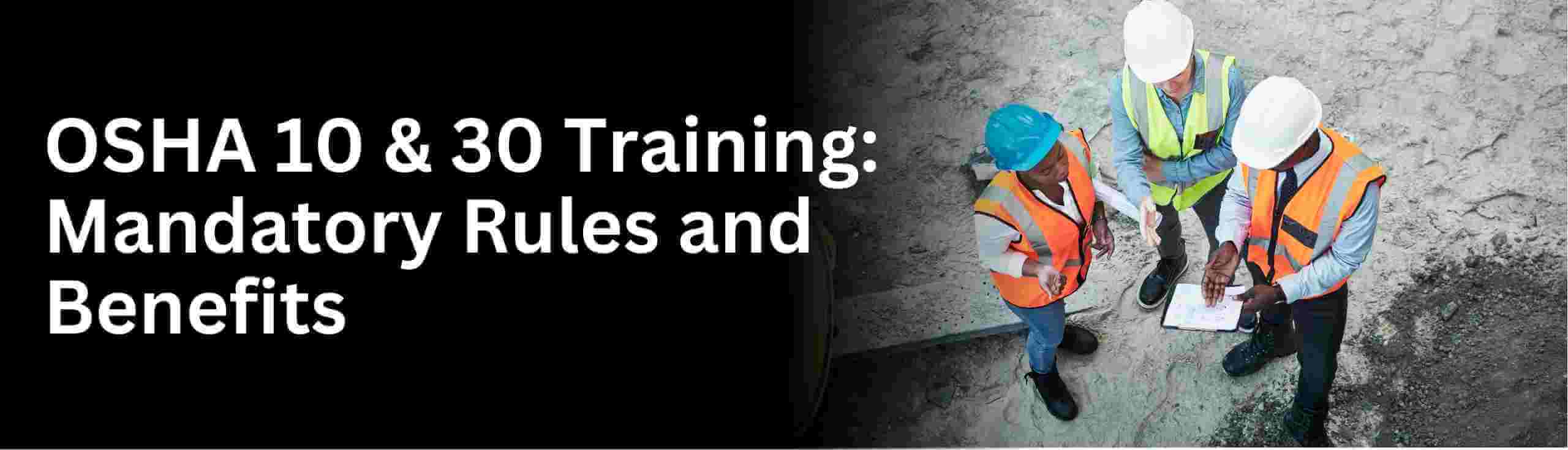
Every year, thousands of workers are injured or lose their lives in workplace accidents. These incidents highlight why safety training is necessary for protecting workers. The Occupational Safety and Health Administration (OSHA) plays a central role in workplace safety by setting and enforcing standards across the United States. This raises an important question for both workers and employers: Is OSHA training mandatory? Understanding the requirements helps create safer job sites and keeps businesses in compliance with OSHA standards.
OSHA does not require every worker to complete OSHA 10-Hour or 30-Hour training. Instead, training becomes mandatory in certain situations:
Hazard-Specific Training: OSHA standards require training when workers face specific hazards, such as fall protection, respiratory protection, confined spaces, or hazardous chemicals. Employers are responsible for providing this training.
Employer or Contractor Policies: Many employers and contractors require OSHA 10-Hour or 30-Hour training as a condition of employment, project compliance, or contract eligibility, particularly in construction and general industry.
State Plans: States with OSHA-approved State Plans, such as New York and Virginia (VOSH), may set additional rules that require OSHA training for certain workers. These state-specific requirements can go beyond federal OSHA standards.
OSHA training is not mandatory in every situation, but it is strongly recommended. In 2023, the construction industry recorded 1,075 worker fatalities in the United States. Falls, slips, and trips caused 421 of those deaths, representing about 39% of construction fatalities. The leading hazards in construction include falls, struck-by incidents, electrocutions, and caught-in/between accidents—commonly known as the “Fatal Four.” OSHA training directly addresses these hazards.
In 2022, private industry employers in the United States reported about 2.8 million nonfatal workplace injuries and illnesses. These incidents lead to lost productivity, medical expenses, and financial burdens for businesses. OSHA-authorized training gives workers the knowledge to identify hazards, take protective steps, and protect themselves and their coworkers.
These added standards mean some industries may require extra training that is not covered by federal OSHA courses alone.
Completing OSHA 10-Hour or OSHA 30-Hour training provides important benefits:
Hazard Awareness: Workers learn to identify and control common jobsite hazards before they cause accidents.
Regulatory Compliance: Employers lower the risk of OSHA violations, penalties, and legal issues by providing the required training.
Career Opportunities: Many employers require OSHA 10 or 30 training for hiring, giving trained workers a stronger competitive advantage.
For convenience, many workers and employers choose OSHA-authorized online training. Platforms like OSHA Training School offer OSHA 10-Hour and 30-Hour courses for both Construction and General Industry. These courses are accessible anytime, making them suitable for busy schedules.
Upon completion, workers receive:Is OSHA training mandatory? The answer depends on the job, industry, and specific hazards. While OSHA does not require every worker in the United States to complete OSHA 10 or 30 training, many employers, contractors, and state plans set it as a requirement. More importantly, OSHA training is one of the best ways to lower accident rates, protect lives, and build safer workplaces. With BLS statistics showing ongoing risks in construction and general industry, OSHA training remains one of the best investments in both worker safety and career growth.
Trusted by thousands of workers & supervisors