
discount helmet Get Your Exclusive! Discount    Chat With Us  


Posted On: March 01, 2024

Crane Hand Signals: Safety Communication Guide


hand Crane Signals

Introduction

Safety is important in any field, especially in construction, where mistakes can have serious consequences. Crane hand signaling is key to maintaining safety on construction sites by facilitating clear communication between crane operators and ground crews. It is imperative to understand that even small misunderstandings can lead to severe incidents. Additionally, crane operations improve the overall productivity of a construction project. Accurate signaling can help in exact movement and reduce the risks of damage to both the crane and its load.

Understanding crane hand signaling is about more than just knowing how to operate a crane. It’s about understanding a language; a form of communication utilized on construction sites to ensure the safe handling and operation of cranes. These signals, either verbal or hand gestures, provide instructions to the crane operator, making it possible to maneuver the crane safely around the worksite.
Stop Signals:

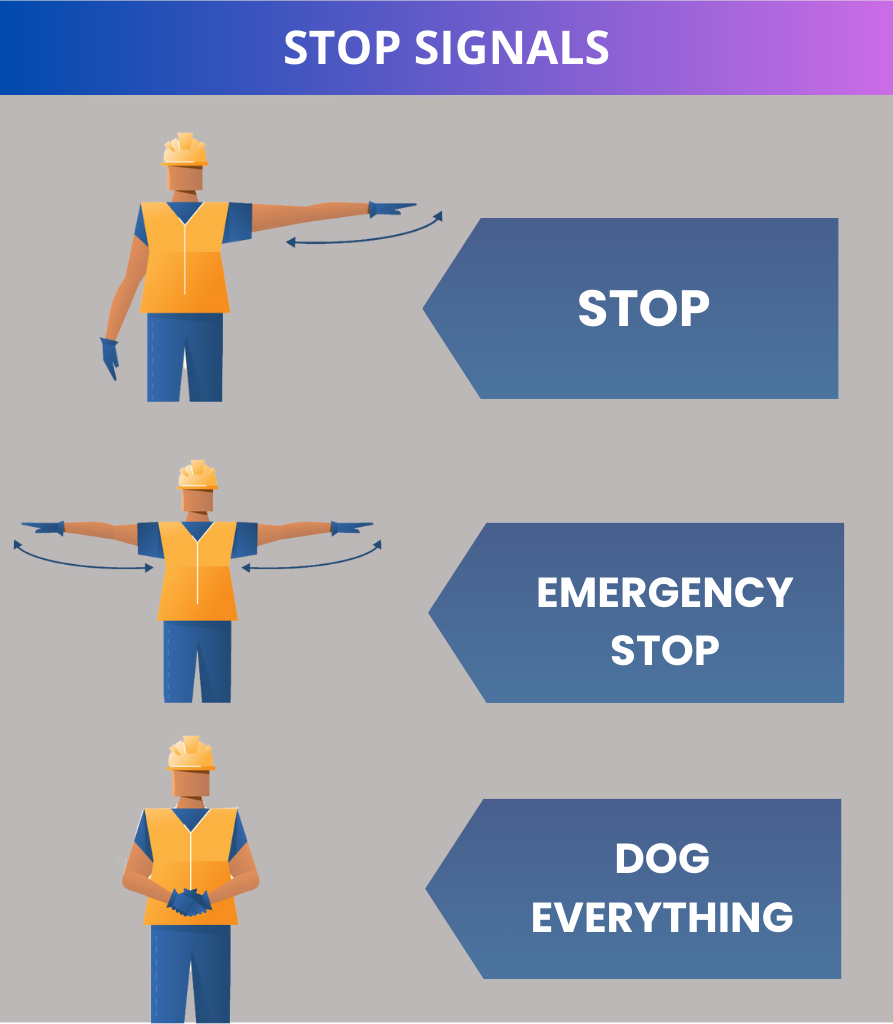
  • Stop: Stretch out your arm, with the palm facing down, then swing it side to side touching the chest and returning to the starting position.
  • Emergency Stop: Hold your arms out straight to the sides, palm down, and swing them from side to side.
  • Dog Everything: Interlock your hands at waist level.
Stop Signals In Crane handling

Boom And Load Signals

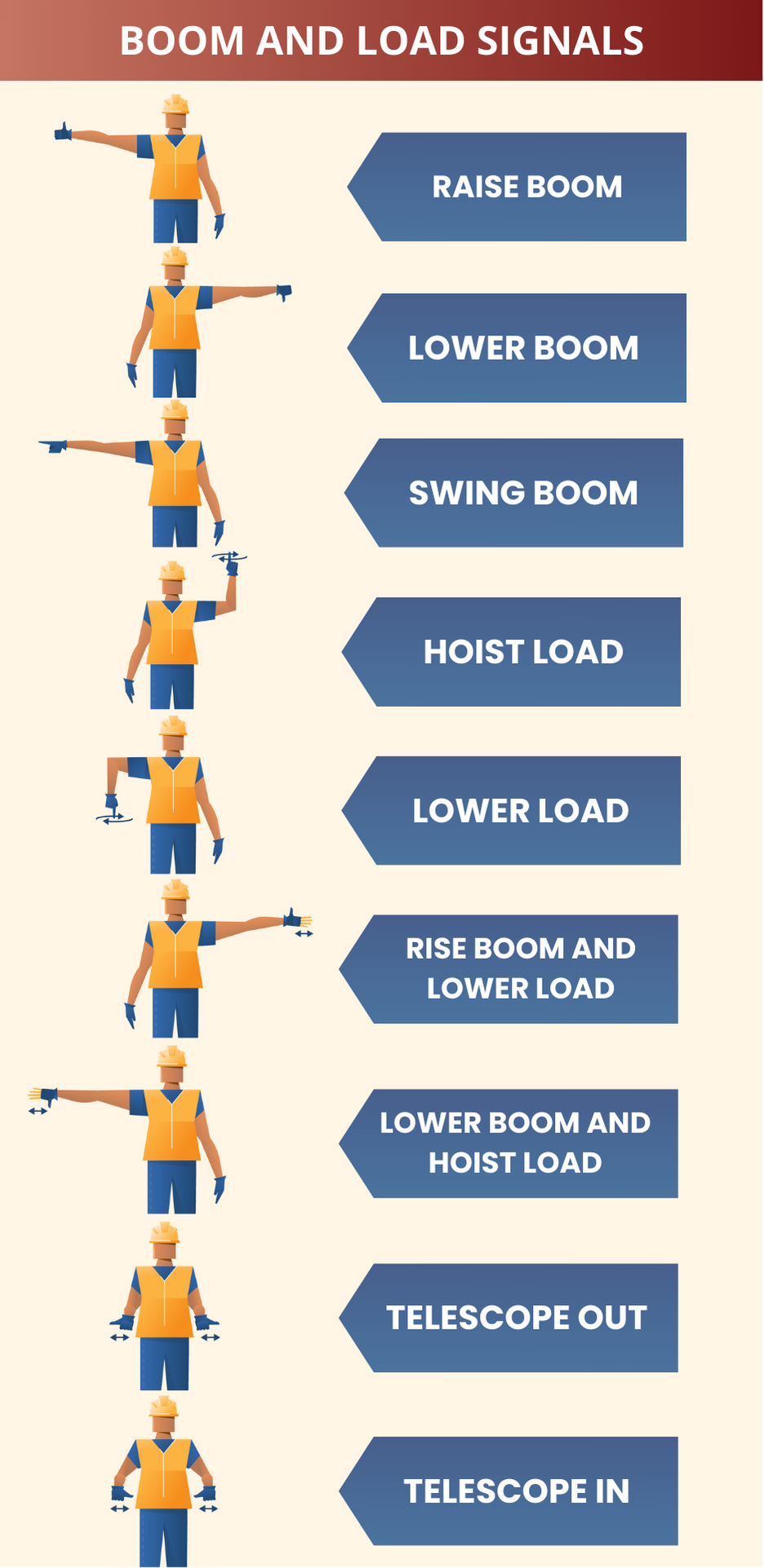
  • Raise Boom: Outstretch your arm, raise your thumb, and tightly clench your fist.
  • Lower Boom: Reach your arm out, flip your thumb downward, and tightly close your fist.
  • Swing boom: Point your index finger outward to indicate the swing direction, keeping your arm stretched.
  • Hoist Load: Lift one arm high and rotate your index finger upward in small circles.
  • Lower Load: With one arm hanging by your side, direct your finger downward and rotate it in small circles.
  • Raise the Boom and Lover the Load: Arm out to the side, thumb pointing up, fingers opening and closing smoothly.
  • Lower the Boom and Raise the Load: Arm out to the side, thumb pointing down, fingers opening and closing smoothly.
  • Telescope Out: Position your hands at waist level, thumbs directing outward, with fists clenched.
  • Telescope in: Position your hands at waist level, thumbs directing inward, with fists clenched.
Boom load Signals in Crane Handling

Travel Signals

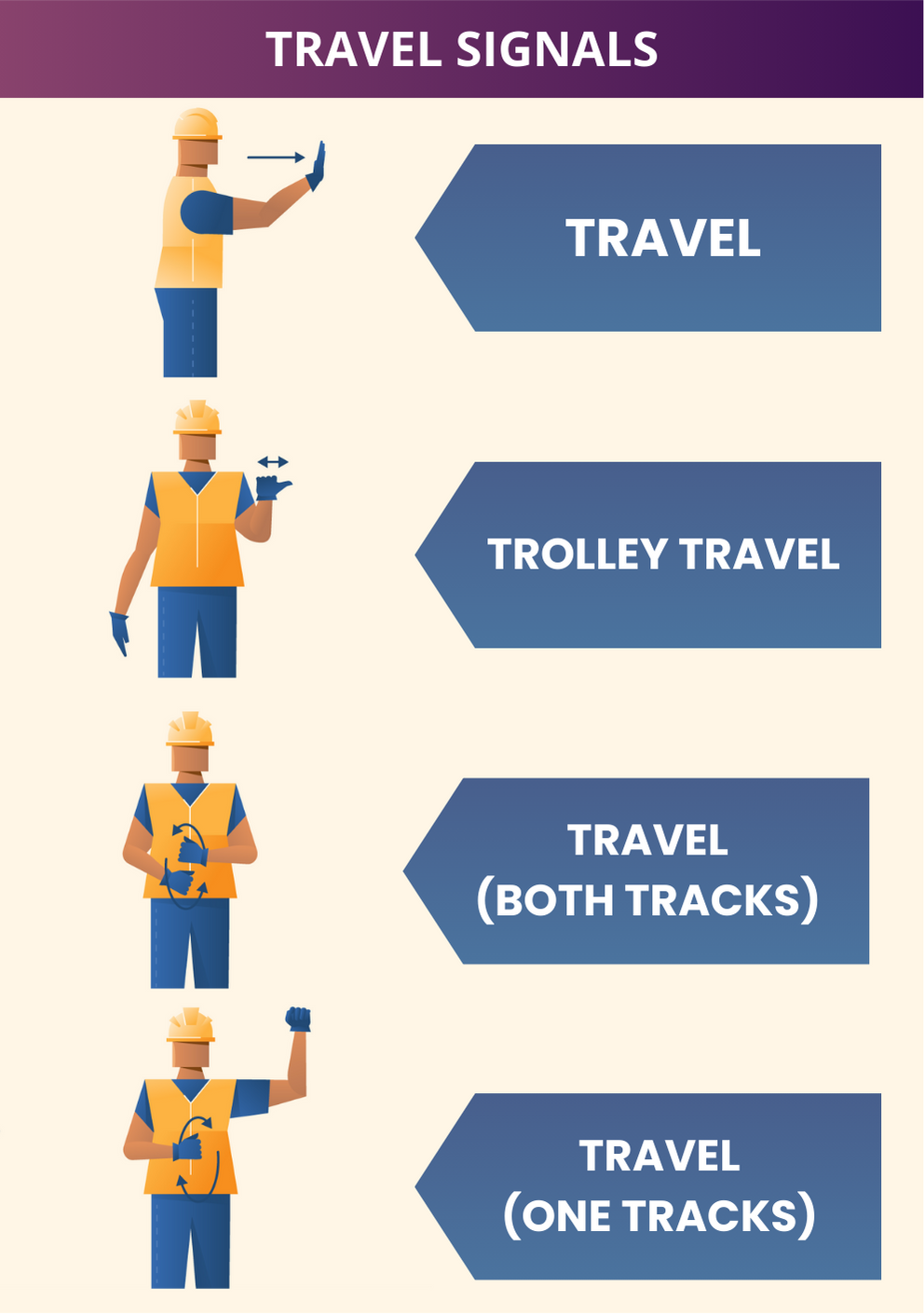
  • Travel (Mobile Cranes): Stick out your hand in front with fingers indicating skywards, pushing forward and backward in the direction of travel.

  • Trolley Travel: Hold your hand with the palm up and fingers together, then use your thumb to show which way the trolley should go by moving your fist.

  • Crawler Crane Travel (Both Tracks): Twirl your closed fists in front of your body. If you rotate them towards yourself, it indicates moving forward. If you rotate them away from yourself, it indicates moving backward.

  • Crawler Crane Travel (One Track): Raise one fist to signal the track to be secured, then move the other fist in circles in front of your body to show the direction the object should move.
Crane hand signaling
Crane Safety and Basic Rigging Training Suite

$59.00

Register Now
travel Signal Signs in crane Signaling

The Evolution of Crane Signaling

The art of crane signaling has evolved over the years, adapting to technological advancements and changing construction practices. Modern crane signaling now includes electronic devices and two-way radios, providing an additional layer of safety.

However, despite these advancements, traditional hand signals remain a pivotal part of crane operations. They ensure communication continues even when technology fails. Their universal communication overcomes language barriers, making them invaluable in construction worldwide.


Conclusion

In construction and industrial zones, where noise levels and distance disrupt verbal communication, crane hand signaling plays a key role in communication and coordination. Knowing the proper hand signals and using them correctly not only ensures the safety of personnel and equipment but also improves productivity and maintains legal compliance. Good communication between the signal person and the crane operator is not just mandatory, it is imperative for accident prevention.


Written by: Muntaha Islam


Stay Informed with OSHA Training School

Know about osha kansas state 10 hour construction and general training

Kansas OSHA Training Requirements | 10 and 30 Hour Courses

For those working in the Kansas construction, manufacturing, or oil and gas industry, the question...

Jan 13, 2026
Learn about suspended scaffold safety training and guidlines

Suspended Scaffold Safety | OSHA Guidelines & Best Practice

Suspended scaffolds are temporary work platforms that hang from secure anchorage points and are...

Jan 09, 2026
Learn about what is supported scaffold safety

Supported Scaffold Safety: OSHA Standards & Hazards

Supported scaffolds are temporary elevated platforms supported by structural members and used across construction and industrial...

Jan 06, 2026
know about new york site safety manager renewal online training

Site Safety Manager Renewal in New York City

Renewing a Site Safety Manager (SSM) certification in New York City is a regulatory requirement that keeps safety professionals current...

Dec 30, 2025
Know about get osha 10 hour and osha 30 hour training in colorado state

Colorado OSHA 10 and 30 Hour Training - Online OSHA Certification

Many jobs in Colorado expose workers to fall hazards, electrical risks, machinery hazards, and...

Dec 26, 2025
Learn about osha 30 hour spanish construction and general for worker

OSHA 30 Spanish: Advanced Safety Certification for Hispanic Workers

Many Hispanic and Latino workers in the U.S. are employed in high-risk industries such as construction...

Dec 23, 2025