Introduction
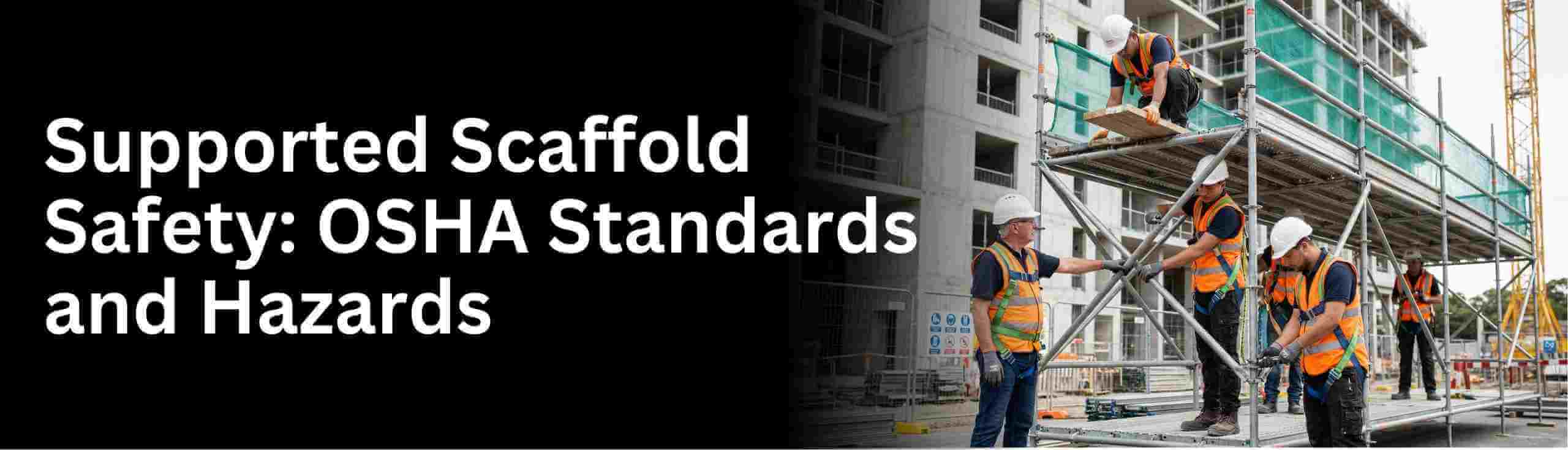
Supported scaffolds are temporary elevated platforms supported by structural members and used across construction and industrial job sites. They allow workers to perform tasks at height safely when built and used correctly. Federal data shows that scaffold-related incidents continue to contribute to thousands of injuries and dozens of fatalities in the United States each year. Understanding supported scaffolds, their hazards, and OSHA requirements is important for employers, supervisors, and workers.
What Is a Supported Scaffold?
A supported scaffold is a work platform supported by structural members such as frames, poles, legs, or outriggers. These scaffolds are built from the ground up and are tied to or braced against a structure or stable surface to maintain proper support and balance.
Main Components of Supported Scaffolds
- Platforms: Elevated surfaces used by workers and for placing tools and materials.
- Frames or Posts: Structural members that support the scaffold platform.
- Guardrails and Toeboards: Help protect workers from falls and control falling materials.
- Braces and Ties: Help keep the scaffold stable and properly aligned.
Supported scaffolds are commonly used on construction and industrial job sites because they can be adjusted to different heights and used for a wide range of work tasks.
Scaffold Injuries and Fatalities - OSHA Reports
- OSHA’s Economic Analysis estimates that about 9,750 injuries in the U.S. construction industry each year are related to scaffold work.
- Of the approximately 924 occupational fatalities in construction annually, at least 79 are associated with scaffold work.
- 72% of workers injured in scaffold accidents attribute the incident to platforms or supports giving way, slipping, or being struck by falling objects.
- Only 33% of scaffolds involved in these accidents were equipped with guardrails.
- Scaffold-related fatalities account for about 9% of all construction workplace deaths.
Supported Scaffold Safety Standards
OSHA’s scaffold standards for construction are found in 29 CFR 1926 Subpart L, which includes main requirements:
1. Load Capacity:
A supported scaffold must support at least four times the maximum intended load, including workers, tools, and materials.
2. Competent Person Inspection:
A competent person must inspect the scaffold before each work shift and after any event that might affect its integrity.
3. Fall Protection:
Workers on supported scaffolds more than 10 feet above a lower level must be protected by:
- Guardrail systems, or
- Personal Fall Arrest Systems (PFAS)
4. Safe Access
Ladders, stairs, ramps, or direct access points must be provided so workers can reach scaffold platforms safely.
Hazards Associated with Supported Scaffolds
Supported scaffolds involve several hazards when they are not properly assembled, maintained, or used:
- Fall from Height: The leading cause of scaffold injuries and fatalities, usually linked to missing guardrails or the absence of fall protection systems.
- Scaffold Collapse: Scaffolds that are unsecured, overloaded, or incorrectly assembled can collapse during use or while being erected or dismantled.
- Falling Objects: Tools, materials, or debris can fall from elevated platforms and strike workers below.
- Electrocution: Scaffolds installed too close to energized power lines can expose workers to electrical hazards.
Best Safety Practices for Supported Scaffolds
To reduce accidents and comply with OSHA standards, follow these safety practices:
- Use a Competent Person: A competent person must inspect supported scaffolds and supervise assembly, modification, and dismantling activities.
- Follow Load Requirements: Do not exceed the scaffold’s rated load capacity, including the combined weight of workers, tools, and materials.
- Install Guardrails and Toeboards: Guardrails and toeboards help control fall hazards and falling materials from scaffold platforms.
- Provide Safe Access: Ladders, stair towers, or ramps must be provided for each scaffold level; climbing scaffold frames is not permitted.
- Maintain Clearance from Power Lines: Keep a minimum distance of 10 feet from energized power lines, or more depending on voltage.
- Provide Worker Training: Workers must receive training on scaffold hazards, load limits, and fall protection methods before starting work.
Conclusion
Supported scaffolds play an important role in construction and maintenance work by providing access to elevated tasks when they are assembled and used correctly. However, U.S. government data shows that scaffold incidents continue to result in thousands of injuries and dozens of fatalities each year. Following OSHA’s supported scaffold standards, conducting regular inspections, and applying proper safety systems helps control hazards on job sites. When employers and workers prioritize scaffold safety, regulatory compliance improves and overall job-site safety performance improves.
Written By: Muntaha Islam