Introduction
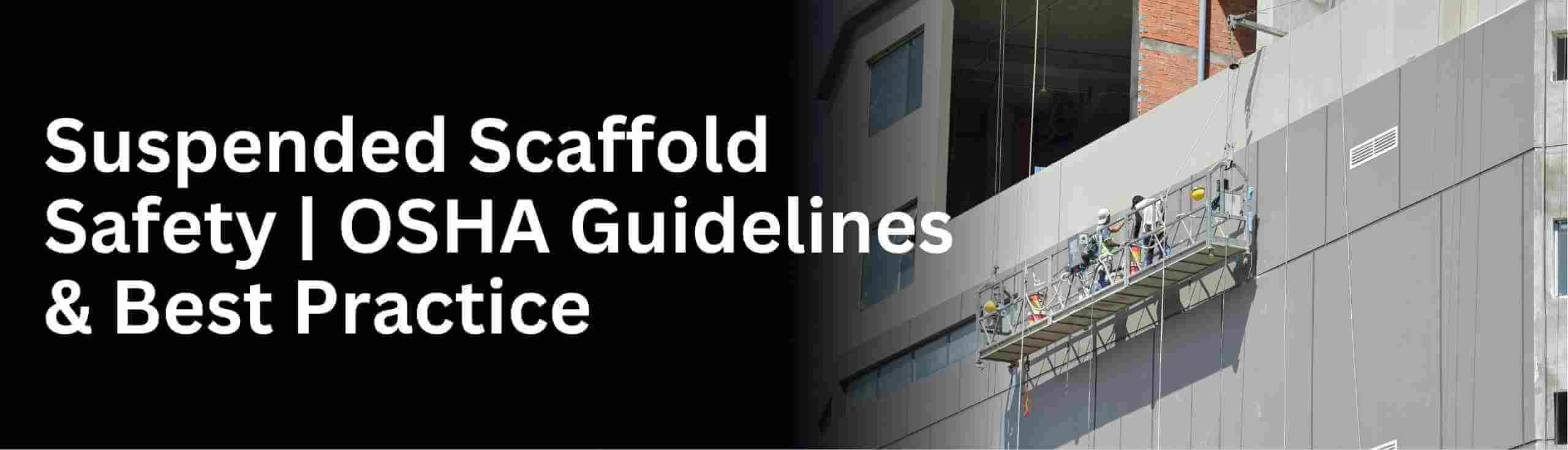
Suspended scaffolds are temporary work platforms that hang from secure anchorage points and are commonly used for exterior building work and maintenance tasks, such as window washing on high-rise buildings. These systems allow workers to reach elevated areas that are difficult to access with supported scaffolds. Because suspended scaffolds rely on ropes or cables rather than ground-based structures, improper setup or use can lead to serious incidents. Understanding suspended scaffold systems, related hazards, and OSHA requirements is important for employers, supervisors, and workers.
What Is a Suspended Scaffold?
A suspended scaffold is a work platform supported by ropes or cables that are attached to a structure above the work area. Unlike supported scaffolds, these platforms are not built from the ground up and rely entirely on their suspension systems to stay elevated and stable.
Common types of Suspended Scaffold include:
- Single-point adjustable scaffolds
- Two-point adjustable scaffolds (swing stages)
- Multi-point suspended scaffolds
Suspended scaffolds are commonly used for installing windows, repairing building facades, painting, and cleaning the exterior of buildings.
Components of Suspended Scaffolds
- Platforms: Work surfaces where workers stand and place tools or materials.
- Suspension Ropes or Cables: Support the platform and carry the applied load.
- Hoists: Manual or powered devices used to raise and lower the platform.
- Anchorage Points: Secure attachment points on the structure that support the suspension system.
- Guardrails: Provide edge protection where required by OSHA standard.
- Personal Fall Arrest Systems (PFAS): Required to protect workers on suspended scaffolds.li>
Suspended Scaffold Safety Standards (OSHA)
OSHA safety requirements for suspended scaffolds are outlined in 29 CFR 1926 Subpart L and apply to all suspended scaffold types, including single-point, two-point (swing stage), and multi-point systems:
1. Load Capacity:
- Suspended scaffolds and all components must support at least four times the maximum intended load.
- The load includes workers, tools, materials, and equipment.
2. Independent Fall Protection:
- Each worker on a suspended scaffold must use a Personal Fall Arrest System (PFAS).
- The PFAS must be attached to an independent lifeline, separate from the scaffold’s suspension system.
3. Secure Anchorage:
- Suspension ropes and lifelines must be connected to secure anchorage points capable of supporting required loads.
- Counterweights must be properly secured and must not be used as work platforms.
4. Competent Person Inspections:
- A competent person must inspect suspended scaffolds, ropes, hoists, and anchorages:
- Before each work shift
- After any event that could affect scaffold safety
5. Safe Access
- Workers must be provided safe access to suspended scaffolds.
- Climbing suspension ropes or hoist cables is not permitted.
6. Power Line Clearance:
- Suspended scaffolds must maintain at least 10 feet of clearance from energized power lines, or more depending on voltage.
Hazards Associated with Suspended Scaffolds
Suspended scaffolds can be dangerous if they are not correctly installed, inspected, or maintained:
- Falls from Height: Commonly linked to missing, damaged, or improperly used personal fall arrest systems.
- Platform Failure Can result from worn suspension ropes, hoist malfunctions, or overloaded platforms.
- Falling Objects: Tools, materials, or debris can fall from elevated platforms and strike workers below.
- Electrical Hazards: Contact with energized power lines can lead to electrocution or serious electrical injuries.
- Swinging or Instability: Wind or uneven loading can cause the platform to sway or tilt.
Best Safety Practices for Suspended Scaffolds
To comply with OSHA standards and control suspended scaffold hazards, follow these practices:
- Use a Competent Person: The leading cause of scaffold injuries and fatalities, usually linked to missing guardrails or the absence of fall protection systems.
- Inspect Ropes and Hoists Daily: Scaffolds that are unsecured, overloaded, or incorrectly assembled can collapse during use or while being erected or dismantled.
- Use Independent Lifelines Tools, materials, or debris can fall from elevated platforms and strike workers below.
- Follow Load Limits: Scaffolds installed too close to energized power lines can expose workers to electrical hazards.
- Maintain Power Line Clearance: Scaffolds installed too close to energized power lines can expose workers to electrical hazards.
- Provide Worker Training: Scaffolds installed too close to energized power lines can expose workers to electrical hazards.
Conclusion
Suspended scaffolds provide access to high and hard-to-reach exterior work areas, but they carry serious risks if not used correctly. Falls, platform failures, falling objects, and electrical hazards remain common threats when safety standards are ignored. Following OSHA requirements for load limits, secure anchorage, independent fall protection, competent person inspections, and safe work practices helps control these risks. Prioritizing scaffold safety, training workers, and maintaining equipment creates safer work environments and protects workers from preventable injuries and fatalities.
Written By: Muntaha Islam